

Global Carbon Methodologies Aligned with Biodiversity Framework Launched Under Satoyama Mace Initiative
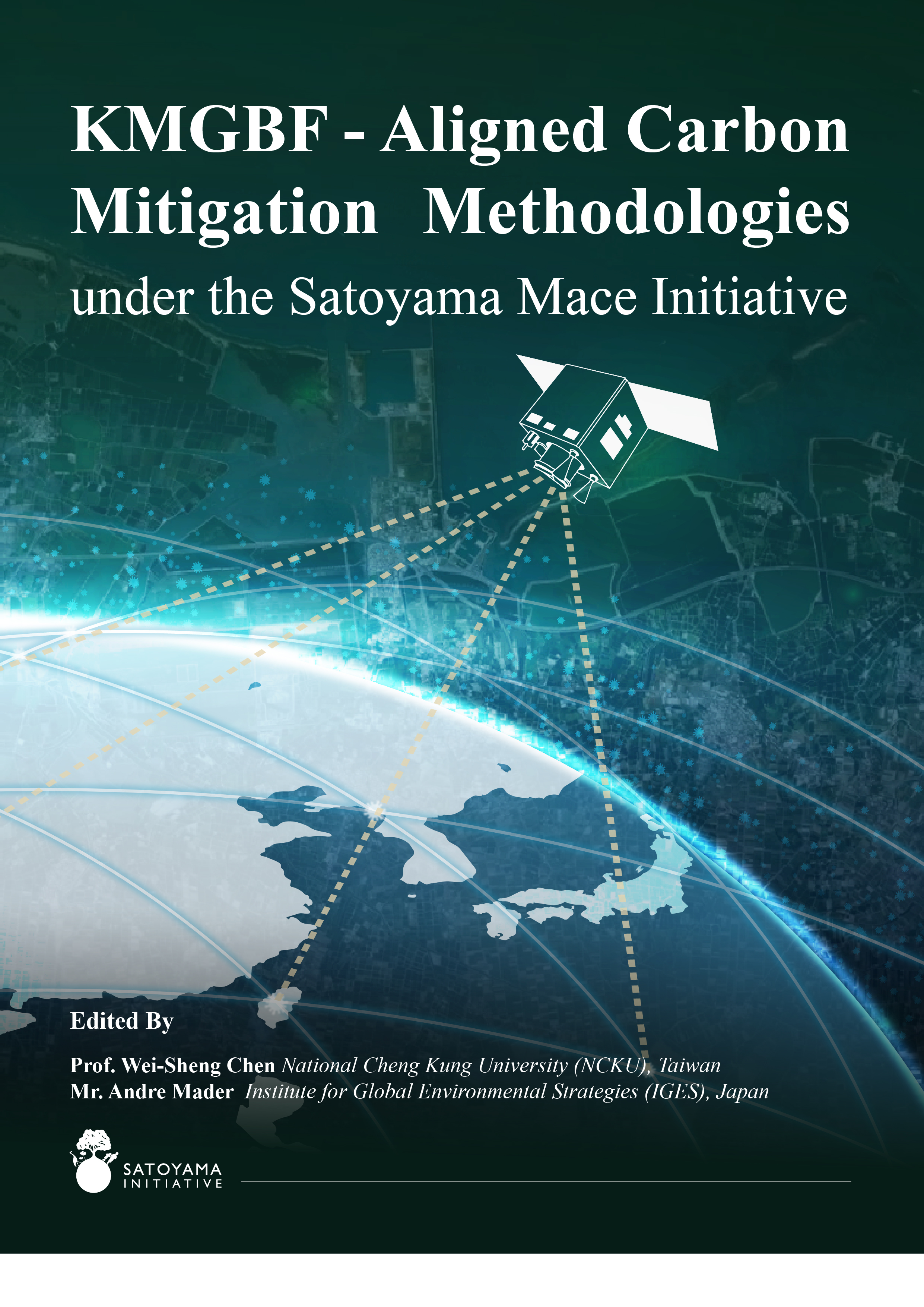
“KMGBF-Aligned Carbon Mitigation Methodologies under the Satoyama Mace Initiative” (ISBN 978-626-447-339-2), scheduled for publication on May 1, 2026. (The cover story is designed and supported by Taiwan Space Agency (TASA).)
Satoyama Mace Initiative launches biodiversity-aligned carbon methodologies integrating climate action, ecosystem restoration, and community-based development.
TAIWAN, May 1, 2026 /EINPresswire.com/ -- A new suite of carbon mitigation and sequestration methodologies aligned with the Kunming–Montreal Global Biodiversity Framework (KMGBF) has been officially launched under the Satoyama Mace Initiative (SMI), marking a significant step toward integrating climate action with biodiversity conservation and community-based development.
The methodologies’ development, endorsed in IPSI collaborative activity by the International Partnership for the Satoyama Initiative (IPSI), were approved following a rigorous international review involving experts from the United Nations Development Programme, United Nations Environment Programme, and leading academic institutions across nine countries.
The review process was coordinated by Prof. Wei-Sheng Chen of National Cheng Kung University and Mr. Andre Mader of the Institute for Global Environmental Strategies. Of the submissions evaluated, 52.9% were approved, reflecting a highly selective and quality-driven assessment.
“These methodologies represent a significant step forward in operationalizing biodiversity-aligned climate solutions,” Chen said. “They integrate ecosystem restoration, biodiversity conservation, and equitable benefit-sharing through scientifically robust monitoring, reporting, and verification systems.”
Integrating Climate and Biodiversity
The SMI framework introduces a biodiversity-centered approach to carbon accounting across socio-ecological production landscapes and seascapes (SEPLS). Developed in alignment with established standards such as the Clean Development Mechanism (CDM) and Climate Action Reserve (CAR), the methodologies emphasize transparency, environmental integrity, and measurable outcomes.
Unlike conventional carbon offset systems, the framework incorporates biodiversity indicators, ecosystem integrity metrics, and socio-economic benefits, positioning carbon finance as a tool for ecological regeneration rather than simple emissions compensation.
Diverse Methodologies Across Sectors
The approved portfolio spans multiple sectors and ecosystems, including:
Methane emission avoidance through organic waste processing, developed by Chiu-Chung Young, National Chung Hsing University
Biochar utilization for soil enhancement and long-term carbon storage, developed by Shu-Mei Wang, National Taiwan University
Carbon capture in agricultural systems and controlled environments, developed by Amit Kumar Sharma and Yen-Hsun Su, National Cheng Kung University
Crop rotation in integrated land-use systems, developed by Amit Kumar Sharma and Chen-Piao Yen, National Cheng Kung University and Tainan New Agricultural Biotechnology Production Cooperative
Wetland and seagrass restoration for blue carbon and coastal resilience, developed by Ya-Hui Chang and Shu-Mei Wang, National Cheng Kung University and National Taiwan University
Transition from fossil-based hydrogen to renewable green hydrogen, developed by Jyh-Ming Ting, National Cheng Kung University
Each methodology is supported by modular components designed to standardize implementation, ensure traceability, and prevent double counting.
Advanced MRV and Technological Integration
A key innovation is the System-of-Systems MRV framework , a multi-layered verification network combining satellite monitoring, field data collection, biogeochemical modeling, and artificial intelligence. This integrated approach enhances accuracy while reducing barriers for participation, particularly for communities in developing regions.
The system also supports real-time monitoring of carbon fluxes and biodiversity indicators, strengthening confidence in carbon credit integrity.
Supporting Communities and Global Markets
The initiative emphasizes equitable access to carbon finance, including for Indigenous Peoples and local communities. By embedding principles such as Free, Prior, and Informed Consent (FPIC) and benefit-sharing mechanisms, the framework aims to ensure that carbon revenues directly support those managing biodiversity-rich landscapes. SMI has also begun integrating its carbon credits into international trading platforms, including AirCarbon Exchange (ACX) and Climate Impact X (CIX), linking local ecosystem stewardship with global financial systems.
New Publication Released
The methodologies are compiled in a new volume titled “KMGBF-Aligned Carbon Mitigation Methodologies under the Satoyama Mace Initiative” (ISBN 978-626-447-339-2), scheduled for publication on May 1, 2026.
Mader said he hopes the publication can contribute to demonstrating how carbon mitigation can actively support biodiversity:
“These methodologies aim to show that climate action can go beyond avoiding harm to biodiversity and be a proactive force for sustaining ecosystems and supporting human well-being.”
Toward a Regenerative Carbon Economy
The Satoyama Mace Initiative positions itself as a next-generation platform bridging Indigenous knowledge, ecosystem stewardship, and carbon finance. By aligning with global frameworks including the KMGBF, the Paris Agreement, and the Sustainable Development Goals, it aims to redefine carbon markets as systems that deliver environmental, social, and economic value simultaneously.
As global demand grows for high-integrity carbon credits, the initiative offers a model for integrating science, policy, and community action into a unified approach to climate and biodiversity challenges.
Yen-Hsun Su
SEPLS Carbon Credit Regional Revitalization Center
+ +886 6 200 5437
email us here
Legal Disclaimer:
EIN Presswire provides this news content "as is" without warranty of any kind. We do not accept any responsibility or liability for the accuracy, content, images, videos, licenses, completeness, legality, or reliability of the information contained in this article. If you have any complaints or copyright issues related to this article, kindly contact the author above.
